4 KPIs to track adoptions and foster capacity
4 min read
Every day, animal protection organizations carry out extraordinary work. Between managing emergencies, supporting foster families, and processing adoption applications, your days are fully booked. Yet, despite all this dedication, it can sometimes be difficult to measure the exact impact of your actions or anticipate future needs.
What if you brought a whole new dimension to your organization?
Managing a modern structure relies on a clear view of the numbers. Tracking the right indicators isn't administrative red tape: it's a strategic lever to save more animals, retain your volunteers, and convince your donors. Effective animal welfare association management relies on analyzing core metrics that every shelter or rescue group operating with foster families should track daily.
Why Measure Your Association's Performance?
In the non-profit sector, talking about "performance" or "key metrics" can sometimes sound overly cold or corporate. The reality is quite the opposite. Data serves the animal protection mission.
A data-driven management approach for your rescue organization allows you to:
- Anticipate capacity limits during critical periods, such as summer spikes.
- Highlight your achievements to partners, local municipalities, and grant providers.
- Make informed decisions based on real evidence rather than pure guesswork or gut feeling.
- Identify bottlenecks in the adoption workflow.
The 4 Fundamental Indicators to Track
To operate efficiently—especially when relying on a network of foster families (FF)—your association must focus on a few high-priority metrics.
1. Intake Volume and Animals Rescued
Overall tracking of rescued animals forms the foundation of your operations. It's not just about knowing the total annual count, but understanding the dynamics of your intake trends.
What to analyze:
- Number of new intakes per month and by species (cats, dogs, small pets/exotics).
- Origin of the animals (owner surrender, public shelter transfer, cruelty/neglect, stray/birth).
- Breakdown by specific needs (heavy veterinary care, socialization, bottle-feeding).
Why it's strategic:
Visualizing these volumes allows you to adapt recruitment campaigns for volunteer host families before seasonal peaks arrive. For instance, if kitten intakes surge by 40% every May, anticipate it! Recruit specialized bottle-feeding foster homes as early as late winter.
2. Adoption Rate and Outflow Volume
The adoption rate measures the ratio between the number of adopted animals and the total number of animals taken into care over a specific period. It is the ultimate indicator of your network's flow efficiency.
What to analyze:
- Percentage of animals adopted relative to monthly intakes.
- Profile of animals adopted fastest (age, breed, temperament).
- Rate of adoption failures or post-adoption returns.
Why it's strategic:
A stagnating adoption rate paired with rising intakes signals an imminent risk of volunteer network saturation. If this metric drops, it may indicate a need to revamp social media outreach, improve profile photos, or streamline application processing times. To maximize your placements, check out our guide on 10 mistakes slowing down your adoption process and how to fix them.
3. Average Length of Stay Before Adoption
How many days does an animal spend under your care before finding a permanent home? The average length of stay is a crucial metric for preserving both financial and human resources.
What to analyze:
- Overall average length of stay.
- Average duration by category (kittens vs. adult cats, specific dog breeds, senior animals).
- Time elapsed between official adoption listing and contract signature.
Concrete Example: Imagine adult cats spend an average of 120 days in temporary care, compared to just 20 days for kittens. Spotting this gap enables you to launch targeted campaigns for those "overlooked" adults, shortening their stay and freeing up placement spots much faster.
4. Foster Family Network: Available, Active, and On Hold
Foster families are the lifeblood of your association. Without them, rescues are impossible. Monitoring the health of this network is vital to prevent volunteer burnout.
What to analyze:
- Active Foster Homes: Families currently hosting at least one animal.
- Available Foster Homes: Families ready for immediate placement.
- On Hold / Unavailable: Volunteers taking a well-deserved break or away on vacation.
- Turnover Rate: New foster families onboarded vs. those stepping down.
Why it's strategic:
If your available foster capacity drops to zero, any unexpected veterinary emergency or rescue situation will cause major strain. Systematic tracking also prevents burnout by distributing incoming animals evenly across your network.
How to Centralize Your Data Without Losing Time?
Collecting these indicators using scattered Excel spreadsheets, paper notebooks, or chat threads quickly turns into a logistical nightmare. Data entry errors pile up, information gets lost, and generating statistics takes hours.
Effective management requires a single, centralized tool designed for daily operations.
The Pawer Solution: Automated Reporting for Animal Welfare
Pawer was developed specifically to solve these challenges. Pawer simplifies daily management for rescue organizations by centralizing all data into one intuitive platform.
With Pawer's built-in reporting module, manual statistical calculations are a thing of the past:
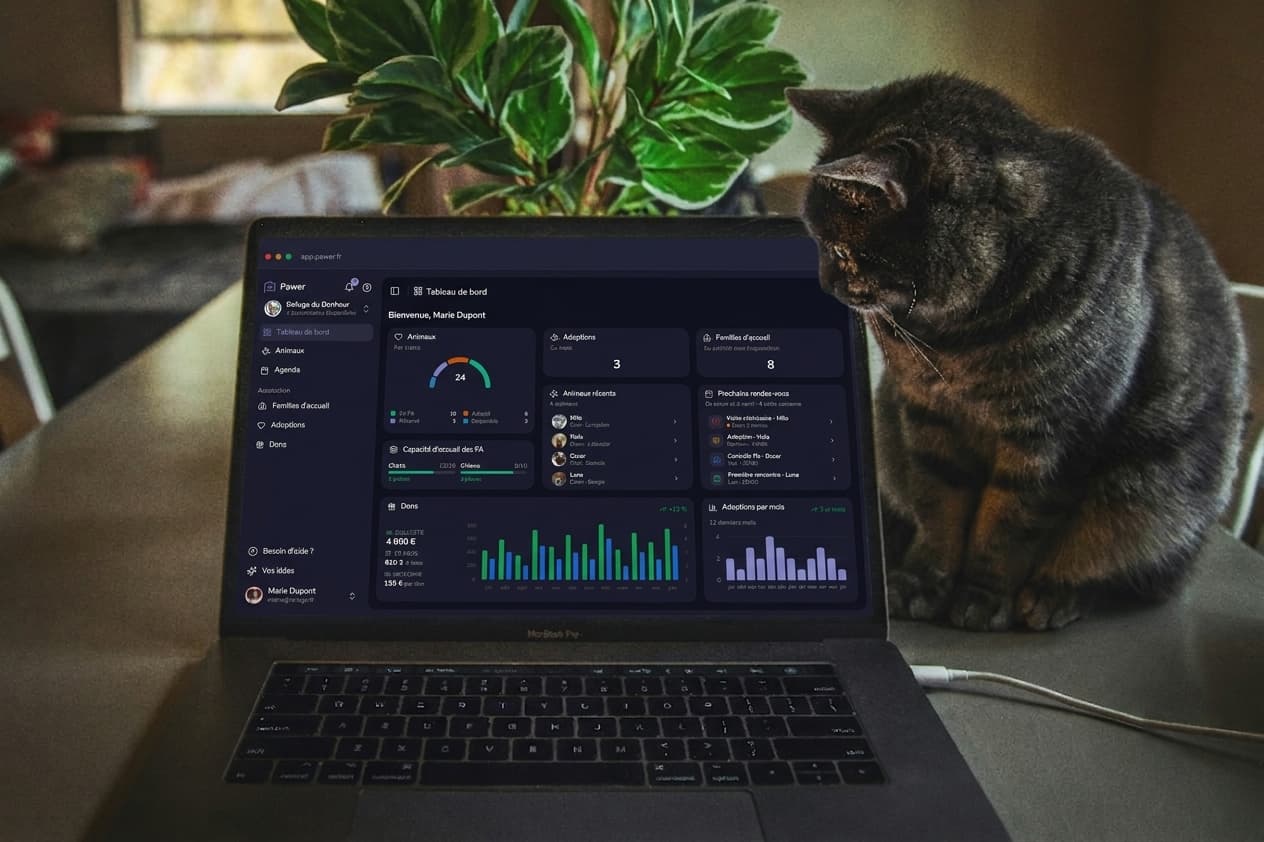
- Real-Time Dashboards: Instantly view the number of animals in foster care, finalized adoptions, and volunteer statuses.
- Precise Length-of-Stay Tracking: Easily spot long-term residents to boost their promotional visibility.
- Foster Network Mapping: Know exactly which foster homes are available, their capacity, and specific placement requirements.
- Simplified Activity Reports: Generate comprehensive summaries in a few clicks for annual general meetings or grant proposals.
By automating key metrics, you reclaim valuable administrative hours and focus on what truly matters: field work and animal welfare.
Building a Strategic Future for Animal Welfare Association Management
Tracking your numbers isn't a burden—it's a powerful operational lever. By staying on top of intake trends, adoptions, lengths of stay, and foster availability, you lead your organization with clarity and confidence.
You gain agility, protect your volunteers from burnout, and give your rescue animals the best possible path to finding forever homes.
👉 Streamline your association's management today! Discover how Pawer can transform your daily operations. Start on the Free plan, with no time limit.