How to write an adoption profile that attracts the right adopters
To publish a rescue's animals for adoption, Pawer offers a public catalog: the organization chooses which animals to publish, each profile appears on the adoptable animals page, and adopters apply from the profile without creating an account. Everything else Pawer does for rescues, from foster homes to adoption contracts, is described on the animal rescue management software page.
A good adoption profile comes down to a few things: clear photos, a personality described with facts, known compatibility with other animals and children, the animal's needs and the adoption terms. This guide covers each part, with a fictional example you can adapt.
What should an adoption profile include?
A profile should first answer the questions every applicant has, so they can tell within a minute whether the animal fits their home. Useful sections:
- The basics: name, species, sex, age, where the animal is (city or area), spay/neuter status and microchip.
- Photos: 3 to 6 recent photos, including at least one clear face shot and one full-body shot.
- Personality: 3 or 4 traits, each backed by something you have actually seen.
- Compatibility: with dogs, cats and children, saying whether it has been tested or not.
- Needs: energy level, yard or outdoor access, time alone, any special care.
- Adoption terms: adoption fee, steps (application, meet and greet, home visit), contract.
Incomplete profiles cost everyone time: they are one of the 10 mistakes slowing down adoptions. Every unanswered question becomes one more message to handle.
Which photos work best for an adoption profile?
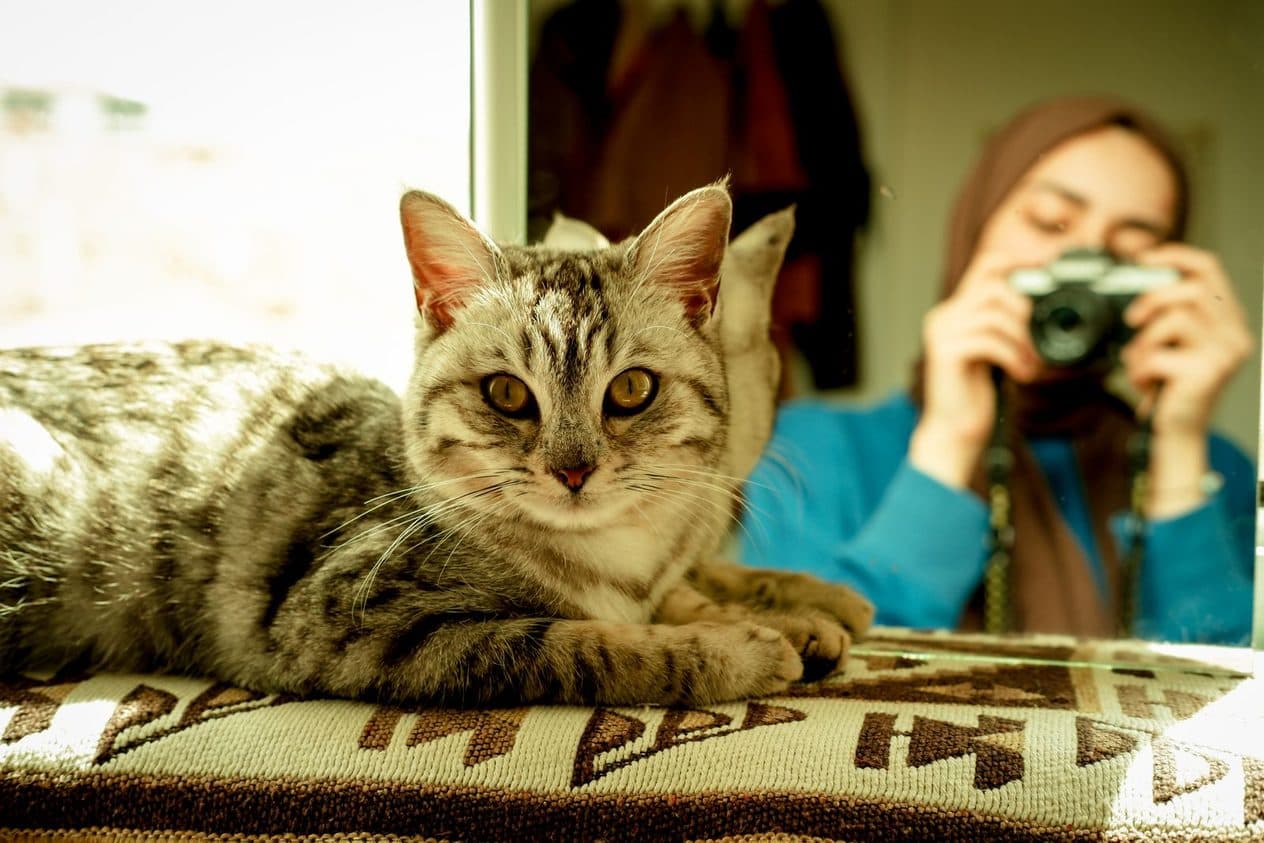
The photo is often the first thing people look at. A few simple rules are enough, even with a phone:
- shoot in daylight, near a window or outdoors, without flash;
- get down to the animal's eye level instead of shooting from above;
- pick a calm background (a blanket, a light wall, a garden) rather than a cluttered room;
- show the animal in real life: playing, resting on a sofa, on a walk;
- avoid kennel or cage shots when the animal lives in a foster home: they say nothing about its daily life.
Update the photos when the animal changes, especially kittens and puppies. A six-month-old photo can disappoint at the first meeting.
How do you describe personality without overselling?
Adjectives alone ("adorable", "perfect") do not help applicants picture life with the animal. Replace them with what the foster home has seen:
- instead of "very cuddly", write "climbs onto laps every evening and purrs when brushed";
- instead of "a bit shy", write "hides for the first two days in a new home, then comes looking for contact";
- instead of "playful", write "plays alone with a ball and loves feather wands".
The foster family knows the animal's daily life best: ask them for two or three concrete anecdotes before writing. An honest description attracts fewer "love at first photo" applicants but more suitable ones, and helps limit returns. If a return happens anyway, here is how to manage an adoption return.
How should you present compatibility and needs?
This is the part that filters applications best. For each type of compatibility (dogs, cats, children), state one of three things:
- tested and it goes well: say in what context ("lives with two cats in foster care");
- tested and it does not work: say so plainly;
- not tested yet: write that too. "We don't know" is better than an assumed "yes".
Be concrete about needs: a dog that needs two long walks a day, a cat that must be able to go outside, an animal that struggles when left alone all day, a medication to give every morning. These details screen out applicants who cannot meet them, before the first conversation.
How do you talk about an animal with a difficult past?
Stay factual and focus on the future. Applicants need to know what affects everyday life, not to read a dramatic story:
- say what the animal needs today ("needs time to trust men", "must be the only pet");
- avoid shocking details and wording that makes the reader feel guilty;
- highlight the progress seen in the foster home;
- offer to talk about it in person during the first conversation.
The same rule applies to a senior or sick animal: give the useful information (treatment, vet follow-up, expected costs) and what the animal brings to daily life.
Does the law require specific information in an adoption listing?
It depends on the country, and sometimes on the region, so check the rules where your organization operates. In France, for example, any offer to rehome a dog or a cat, paid or free, including an adoption from a rescue, must show certain information. According to the French public service guide on owning a dog or a cat, this includes the species and breed (or the mention « n'appartient pas à une race »), sex, age, place of birth and the animal's identification number. That guide also lists the price of the animal or the fact that it is given free of charge. These mentions come in particular from article L214-8-1 of the French rural and maritime fishing code, which requires a free transfer to state explicitly that it is a gift or is free of charge, and from article R214-32-1 of the same code, which requires the mention « de race » or « n'appartient pas à une race ». In France, sites that publish dog, cat and ferret listings must also check the animal's identification and the owner's identity before displaying a "verified listing" label, as explained by the French Ministry of Agriculture.
Elsewhere, look for the equivalent rules from your local authorities or national animal welfare legislation before publishing. This article is for information only and is not legal advice.
What does a good adoption profile look like? A fictional example
Here is an example made up for this article, to adapt to each animal:
Fictional example. Pistachio, a 3-year-old domestic shorthair female, spayed and microchipped, in a foster home. Pistachio is a calm cat who likes to watch before coming closer. In the evening, she settles on the sofa next to her foster family and asks for head scratches. She lives with another cat without any problem; she has not been tested with dogs or young children. She needs a quiet home, an apartment or a house, with secure windows. Adoption fee: to be set by the rescue. To meet her, fill in the application form and her foster family will suggest a time to visit.
This example fits in one paragraph, gives observed facts, says what has not been tested and explains the next step.
How does Pawer help publish adoption profiles?
In Pawer, each animal has a record in the organization's workspace, and the organization chooses which animals to publish in the public catalog. The public profile shows photos, a free-text description and characteristics grouped by theme: health (vaccinated, spayed/neutered), appearance, living conditions (outdoor access needed) and behavior (with dogs, cats and children, energy level, personality traits). A characteristic that has not been filled in is shown as "Unverified", so the profile never displays a "yes" nobody has checked.
Adopters apply from the profile without creating an account, and the organization follows applications in its workspace, as described on the adoption management page. Pawer can also create visuals for social media, from the Pro plan. Pawer does not choose the adopter: the decision stays with the organization.
Want to publish your adoption profiles in the same place you track your animals? Create your free Pawer account.
Frequently asked questions
The basics (name, species, sex, age, location, spay/neuter status, microchip), 3 to 6 recent photos, a personality described with real situations, compatibility with dogs, cats and children, the animal's needs and the adoption terms (fee, steps, contract). Some countries, such as France, also require specific information by law.
Yes, it is the information that filters applications best. For each type of compatibility, say whether it has been tested and how it went, and clearly write "not tested yet" when you don't know.
Stay factual: say what the animal needs today, the progress seen in the foster home and any precautions, without shocking details. Offer to discuss it in person during the first conversation with the applicant.
It is a good idea: showing the fee upfront avoids misunderstandings at the first meeting. In some countries it is also required. In France, according to service-public.gouv.fr, a rehoming offer must state the price of the animal or that it is given free of charge; article L214-8-1 requires a free transfer to state explicitly that it is a gift or is free of charge.
Before / With Pawer
Before
With Pawer
Permanent free plan. No credit card. We help you get started.
